Sciatica affects up to 40% of people at some point in life, making it one of the most common nerve-related pain conditions.
Pain often travels along the sciatic nerve, running through the lower back, hips, and down one leg.
Common causes include herniated discs, piriformis syndrome, and spinal stenosis, all of which can place pressure on nerve tissue.
Yoga offers a low-impact option that supports spinal health while reducing discomfort.
Regular practice can strengthen stabilizing muscles around the spine, create gentle decompression, and ease tension in surrounding tissues.
Research also shows yoga reduces chronic low back pain, especially when paired with standard medical care.
Careful pose selection remains essential, as some movements can aggravate symptoms.
Yoga Poses to Try for Sciatica Relief
Carefully chosen yoga poses can reduce sciatic nerve irritation by supporting spinal alignment, easing muscular tension, and improving circulation around affected areas.
Movements listed below prioritize control, symmetry, and support, making them suitable during recovery and long-term management.
Gentle Back Extensions and Core Strengthening
Gentle backbending strengthens muscles that stabilize the spine while encouraging healthy disc movement.
Controlled engagement prevents excess compression and supports nerve relief.
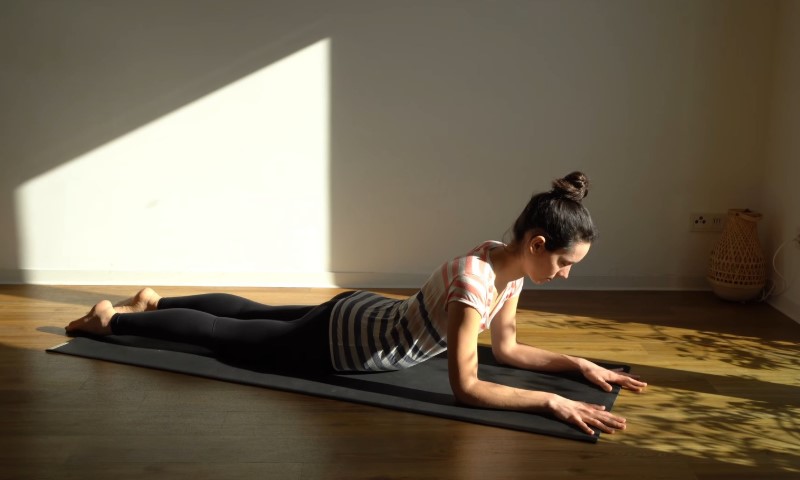
Sphinx Pose
Sphinx Pose introduces mild lumbar extension without forcing depth.
Forearms remain grounded, allowing the chest to broaden as abdominal muscles activate softly.
Practice often results in reduced pressure along the lower spine and improved postural awareness.
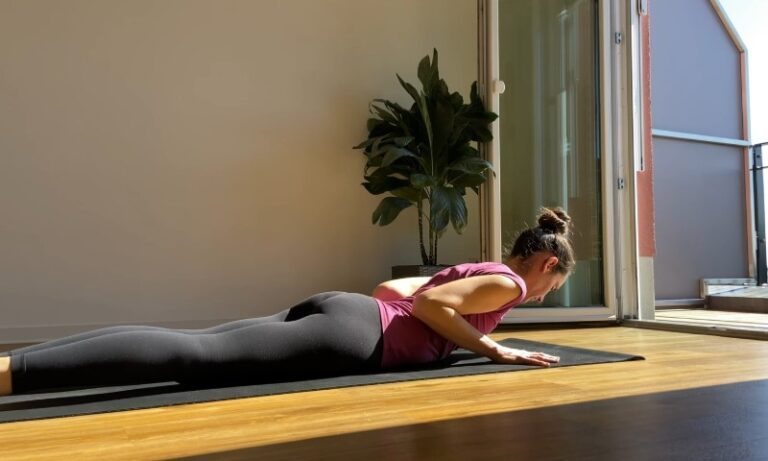
Cobra Pose (Bhujangasana)
Cobra Pose builds strength in spinal extensors while maintaining safety through bent elbows and controlled lift.
Hands stay close to the ribs, creating length through the front body rather than collapse in the lower back.
Attention stays on even weight distribution through palms and pubic bone.
Locust Pose (Salabhasana)
Locust Pose reinforces posterior chain strength, which plays a key role in pelvic stability. Lifting legs only slightly encourages muscular activation without strain.
Useful actions include:
- gentle engagement of gluteal muscles
- lengthening through toes rather than height
- steady breathing to prevent tension buildup
Bridge Pose (Setu Bandhasana)
Bridge Pose supports hip extension while strengthening glutes and hamstrings. Placement of a block under the sacrum allows passive support and longer hold times.
Pelvic stability improves as thighs remain parallel and feet grounded evenly.
Hip Openers and Piriformis Release
Hip tension, particularly around the piriformis muscle, often contributes to sciatic discomfort.
Supported openers allow gradual release without destabilizing the pelvis.
Eye of the Needle or Reclined Pigeon (Sucirandhrasana)
Reclined positioning limits strain while targeting outer hip muscles. Support under the head or lifted foot maintains comfort.
Benefits include improved hip mobility and reduced nerve compression without loading the spine.
Shoelace Pose (Yin Variation)
Shoelace Pose practiced with yin principles, focuses on longer, passive holds. Bolsters or blocks under hips reduce excessive rotation and protect the knee joints.
Slow release encourages deep muscular relaxation over time.
Pigeon Pose Preparation
Modified Pigeon emphasizes alignment rather than depth. Padding under the hips keeps the pelvis level and prevents twisting through the lumbar area.
Attention stays on even weight distribution and steady breathing.
Chair-Supported Hip Opener
Chair assistance adds stability and adjustability. Foot placement and torso angle can change based on comfort level, making the pose appropriate during sensitive recovery stages.
Best Practices for Practicing Yoga with Sciatica
Safe practice relies on timing, support, and awareness.
Consultation with a healthcare professional should occur before beginning any routine.
Practice should begin only after acute inflammation subsides, reducing the risk of symptom escalation.
If you’re following online instructions and want to double-check whether they come from a credible source or were generated by AI, consider using an AI checker free to help verify the reliability of the content.
Key focus areas during sessions include:
- symmetrical pose execution
- pelvic stability rather than depth
- gentle spinal traction over force
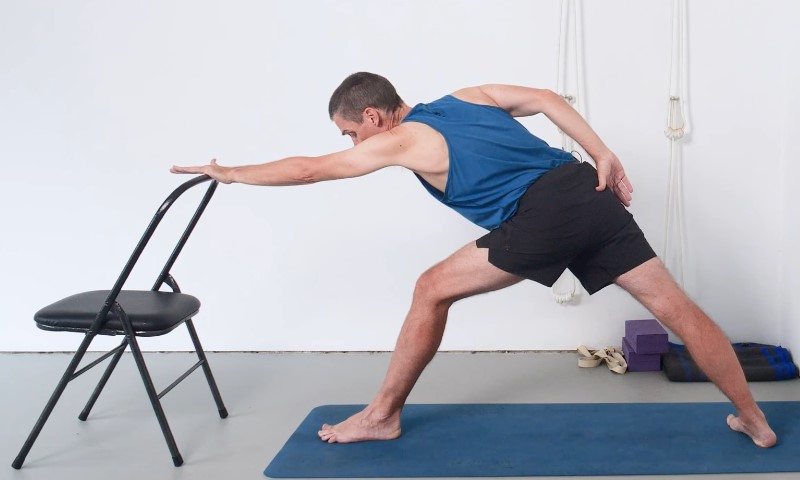
Props such as belts, bolsters, and chairs improve alignment and reduce strain.
Iyengar-based approaches suit sciatica management due to precision and structured support.
Progression should remain gradual, with rest taken whenever discomfort increases or nerve symptoms reappear.
Reclining Poses for Hamstring and Lumbar Relief
Hamstring tightness often increases pull on the pelvis, adding stress to the lower back. Reclining poses allow safe lengthening while protecting spinal alignment.
Supta Padangusthasana I and II
Reclined leg stretches using a belt allow precise control of range.
Neutral spine positioning minimizes nerve irritation while extending hamstrings and inner thighs.
Effective practice focuses on:
- relaxed shoulders against the floor
- steady pelvis without lifting or tilting
- slow extension guided by breath
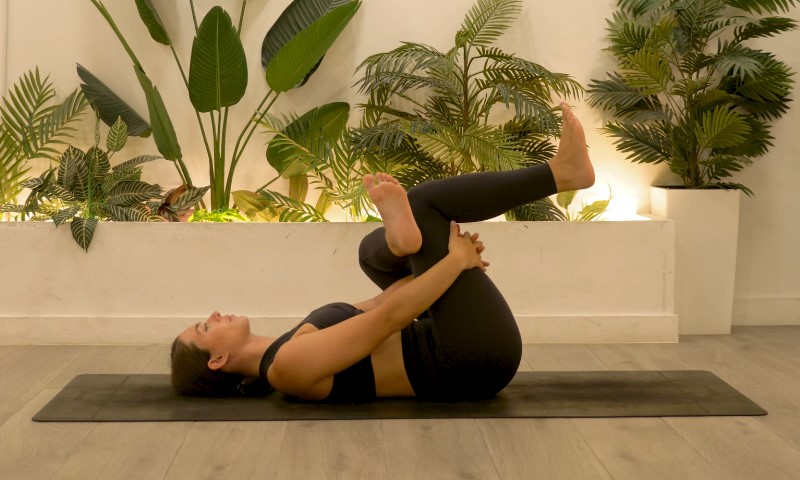
Wind-Relieving Pose (Pavanamuktasana)
Knee-to-chest positioning softens lumbar tension and supports digestion.
One-leg variations offer a gentler option during flare-sensitive periods, keepthe ing remaining leg extended and relaxed.
Supported and Restorative Poses
View this post on Instagram
Restorative shapes calm the nervous system and promote tissue recovery. Support encourages longer holds with minimal effort.
Viparita Karani with Bolster
Legs elevated against a wall reduce lower back fatigue and improve circulation. Bolster placement under hips prevents excessive flexion and maintains natural spinal curves.
Child’s Pose (Balasana)
Child’s Pose offers gentle spinal traction and nervous system calming. Props under chest or hips maintain comfort, especially when knee or hip sensitivity exists.
Chair-Supported Forward Fold
Support through a chair keeps spinal length intact while avoiding disc compression. Hands rest on the seat or blocks, allowing controlled release through the back body.
Savasana with Calves on Chair
Calf elevation reduces lumbar tension and supports neutral pelvic alignment. Positioning encourages full relaxation and integration of prior movements.
Yoga Poses to Avoid with Sciatica
Certain movements increase compression or nerve tension and require caution, especially during active symptoms.
Seated or Standing Forward Folds with Rounded Spine
Poses such as Paschimottanasana or unsupported Uttanasana place stress on lumbar discs. Rounded spinal shapes often intensify pain during flare-ups and delay recovery.
Deep Backbends or Twists Without Support
Wheel Pose, Camel Pose, and strong spinal twists demand high lumbar mobility and strength. Lack of support raises risk of nerve irritation and muscular guarding.
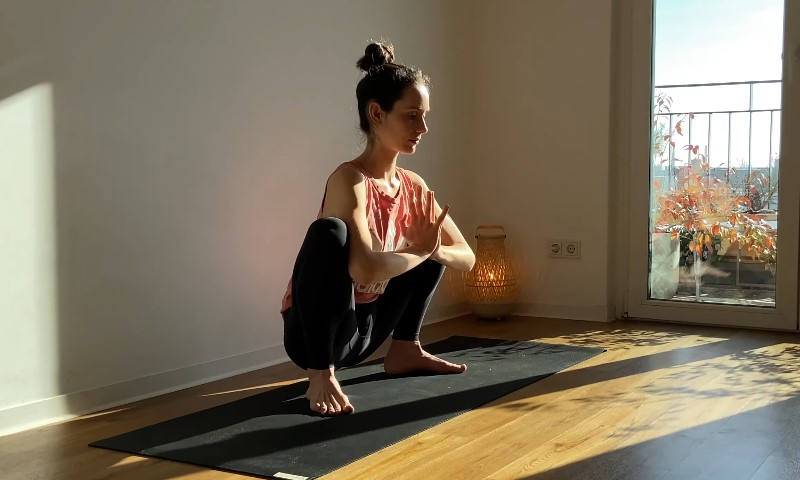
Unsupported Squats or Malasana
Deep squats without props can overload the hips and lower back. Chair-supported options maintain safer alignment and distribute load more evenly.
The Bottom Line
Yoga practiced mindfully and progressively can reduce sciatica symptoms and support long-term spinal health.
Avoidance of intense stretching and respect for physical limits protect nerve tissue.
Supported, alignment-focused approaches decompress the lower back while easing tight hips and hamstrings.
A combination of yoga, medical guidance, and physical therapy offers a safe and effective path toward recovery and pain management.